Saturday, October 12, 2013

Some advice

"Writing Advice: by Chuck Palahniuk
In six seconds, you’ll hate me.
But in six months, you’ll be a better writer.
From this point forward—at least for the next half year—you may not use “thought” verbs. These include: Thinks, Knows, Understands, Realizes, Believes, Wants, Remembers, Imagines, Desires, and a hundred others you love to use.
The list should also include: Loves and Hates.
And it should include: Is and Has, but we’ll get to those later.
Until some time around Christmas, you can’t write: Kenny wondered if Monica didn’t like him going out at night…”
Instead, you’ll have to Un-pack that to something like: “The
mornings after Kenny had stayed out, beyond the last bus, until he’d had to bum a ride or pay for a cab and got home to find Monica faking sleep, faking because she never slept that quiet, those mornings, she’d only put her own cup of coffee in the microwave. Never his.”
Instead of characters knowing anything, you must now present the details that allow the reader to know them. Instead of a character wanting something, you must now describe the thing so that the reader wants it.
Instead of saying: “Adam knew Gwen liked him.” You’ll have to say: “Between classes, Gwen had always leaned on his locker when he’d go to open it. She’s roll her eyes and shove off with one foot, leaving a black-heel mark on the painted metal, but she also left the smell of her perfume. The combination lock would still be warm from her butt. And the next break, Gwen would be leaned there, again.”
In short, no more short-cuts. Only specific sensory detail: action, smell, taste, sound, and feeling.
Typically, writers use these “thought” verbs at the beginning of a paragraph (In this form, you can call them “Thesis Statements” and I’ll rail against those, later). In a way, they state the intention of the paragraph. And what follows, illustrates them.
For example:
“Brenda knew she’d never make the deadline. was backed up from the bridge, past the first eight or nine exits. Her cell phone battery was dead. At home, the dogs would need to go out, or there would be a mess to clean up. Plus, she’d promised to water the plants for her neighbor…”
Do you see how the opening “thesis statement” steals the thunder of what follows? Don’t do it.
If nothing else, cut the opening sentence and place it after all the others. Better yet, transplant it and change it to: Brenda would never make the deadline.
Thinking is abstract. Knowing and believing are intangible. Your story will always be stronger if you just show the physical actions and details of your characters and allow your reader to do the thinking and knowing. And loving and hating.
Don’t tell your reader: “Lisa hated Tom.”
Instead, make your case like a lawyer in court, detail by detail.
Present each piece of evidence. For example: “During roll call, in the breath after the teacher said Tom’s name, in that moment before he could answer, right then, Lisa would whisper-shout ‘Butt Wipe,’ just as Tom was saying, ‘Here’.”
One of the most-common mistakes that beginning writers make is leaving their characters alone. Writing, you may be alone. Reading, your audience may be alone. But your character should spend very, very little time alone. Because a solitary character starts thinking or worrying or wondering.
For example: Waiting for the bus, Mark started to worry about how long the trip would take…”
A better break-down might be: “The schedule said the bus would come by at noon, but Mark’s watch said it was already 11:57. You could see all the way down the road, as far as the Mall, and not see a bus. No doubt, the driver was parked at the turn-around, the far end of the line, taking a nap. The driver was kicked back, asleep, and Mark was going to be late. Or worse, the driver was drinking, and he’d pull up drunk and charge Mark seventy-five cents for death in a fiery traffic accident…”
A character alone must lapse into fantasy or memory, but even then you can’t use “thought” verbs or any of their abstract relatives.
Oh, and you can just forget about using the verbs forget and remember.
No more transitions such as: “Wanda remembered how Nelson used to brush her hair.”
Instead: “Back in their sophomore year, Nelson used to brush her hair with smooth, long strokes of his hand.”
Again, Un-pack. Don’t take short-cuts.
Better yet, get your character with another character, fast.
Get them together and get the action started. Let their actions and words show their thoughts. You—stay out of their heads.
And while you’re avoiding “thought” verbs, be very wary about using the bland verbs “is” and “have.”
For example:
“Ann’s eyes are blue.”
“Ann has blue eyes.”
Versus:
“Ann coughed and waved one hand past her face, clearing the cigarette smoke from her eyes, blue eyes, before she smiled…”
Instead of bland “is” and “has” statements, try burying your details of what a character has or is, in actions or gestures. At its most basic, this is showing your story instead of telling it.
And forever after, once you’ve learned to Un-pack your characters, you’ll hate the lazy writer who settles for: “Jim sat beside the telephone, wondering why Amanda didn’t call.”
Please. For now, hate me all you want, but don’t use thought verbs. After Christmas, go crazy, but I’d bet money you won’t.
(…)
For this month’s homework, pick through your writing and circle every “thought” verb. Then, find some way to eliminate it. Kill it by Un-packing it.
Then, pick through some published fiction and do the same thing. Be ruthless.
“Marty imagined fish, jumping in the moonlight…”
“Nancy recalled the way the wine tasted…”
“Larry knew he was a dead man…”
Find them. After that, find a way to re-write them. Make them stronger.”


Sunday, December 2, 2012

A kind of six word story, or it can be the start of a story.

Mommy, why did the elephant swear? 

--


Thursday, November 22, 2012

Nanowrimo ^.^

Wow, I can't believe that I forgot to tell you guys this. But this is my second year of doing Nanowrimo.
More info can be found here.

And I finally have a cover made for my nanowrimo book, Immortality Doesn't Exist. It was made by a very creative person on the main Nanowrimo forums. It's possibly, one of my favorite book covers ever, that was made for me. And, I find that it fits my book perfectly.

I would say what my book is about by now, but in truth I barely have any idea myself. Other than the fact that it deals with a darkness that wants to be... not so alone in life. It also deals with the fine line between dreams and reality. And how dreams are actually a reality that you have to face, no matter what.


Wednesday, August 22, 2012

An Award. ^.^


My friend Cossy from Endless Ramblings and a Fez, nominated me for the Liebster Blog Award. I've already received the award from my main blog but I like her questions so I'm going to do the blog award, anyways. 

Official rules: The Liebster Award are for bloggers with less than 200 followers. Award winners share 11 facts about themselves, answer the 11 questions asked by the blogger who tagged them, come up with 11 of their own questions and tag 11 more bloggers with the award.

11 facts about me. 

  1. I'm surprised that I can write around 1613ish words each day. 
  2. I finally have the book, Looking for Alaska by John Green. It was on sale at the library the other day for only a quarter, and it's a good book to read, so I bought it. 
  3. I also bought two other books from the library, they are: Octavia Boone's BIG QUESTIONS About Life, the Universe, and Everything by Rebecca Rupp and Mare's War by Tanita S. Davis. 
  4. I'm scared/excited [depends on the time and day you ask me] about going to high school. 
  5. I'm taking all honors classes this year meaning, more work, and possibly less time to write. 
  6. I'm planning on taking AP classes next year. 
  7. I have a cat that likes to hang out by my bedroom window. 
  8. I think The Fault in Our Stars by John Green is kind of like his other book, Looking for Alaska.
  9. My desk is really messy right now. 
  10. I'm taking a college math class this year, despite not liking math that much. 
  11. I don't like math despite being pretty good at it, for fear of failing. 
In which, I now answer 11 questions asked from Cossy. 
  1. If you could own a giraffe, what would you name it? I would name it Bob for lack of a better name to choose from. 
  2. Your best friend in the entire world gave you a rock for your sixteenth birthday. No joke, totally the intended present. How do you react? I would be polite and say, "Umm... thanks, I really like it."
  3. Why did you start a blog? If I recall, I started this blog because around this time last year, I got an idea to write one story each time I have school. And it worked before Nanowrimo came, making this blog into a writing blog. 
  4. What's your favorite food? Any kind of noodles, especially Asian or Raman Noodles. 
  5. Can you cook cantilope? I think it can be cooked, but I certainly can't cook it. 
  6. Do you know how to spell cantilope, cause I don't. C-a-n-t-u-l-a-p-e, C-a-n-t-o-l-u-p-e, Nope, I don't know how to spell it. 
  7. Did you know cantaloupe is spelled like C-A-N-T-A-L-O-U-P-E? Huh, who knew? 
  8. Would you ever consider becoming a lawyer? Nope, I don't have the arguing or the speaking skills to do it. However, my older sister is on her way to becoming a lawyer, that is if she enters law school first. 
  9. Have you ever had a dream where you went to a public place in just your underwear? I'm pretty sure, I never had dreams like that. 
  10. What is your weirdest dream? I have too many weird dreams to count, but the weirdest would be... I don't even know. 
  11. How are you? I'm good how are you? 
11 questions asked by me. 
  1. What is on your bucket list? (Things you want to do before you die)
  2. If you had to have lunch with any fictional character(s) excluding yours, who would it be and why? 
  3. What would you name a newly formed star and why? 
  4. What is your opinion on the whole, world is about to end thing? 
  5. What book would you want to see on the big screens and why? 
  6. If you're a writer: Do you talk to your characters? If you're not a writer: Did you have imaginary friends when you were younger? 
  7. Name one thing that you're extremely proud of. 
  8. What is your happiest moment in life? 
  9. What is your favorite country and why? 
  10. Can you type out the word, supercalifragilisticexpialidocious, with your eyes closed? 
  11. Why are you answering these questions? 
People I tag. 
Anyone with under 200 followers. 
So, if you have under 200 followers you can take this award, if you want. Or you can carry on in your day. 

See ya later, 

Monday, August 20, 2012

A quoteful kind of day

Click to enlarge. 


Friday, August 10, 2012

Beautiful People ~ Echo


Respect your characters, even the minor ones. In art, as in life, everyone is the hero of their own particular story; it is worth thinking about what your minor characters’ stories are, even though they may intersect only slightly with your protagonist’s.
Sarah Waters


Beautiful People, is a blog event created by two people: Sky and Georgie. They post ten questions each month, for you to answer about your character[s]. So you can know more about them. This is helpful if you want a well-developed character people can relate to, in a way.
I’ve seen it around a few blogs a couple of times and looked at the questions once or twice. It wasn’t until now that I’ve decided to do the writing meme. The only reason why I wanted to do it was because I’m bored and I want to get to know my Camp NaNoWriMo characters better. Plus, I’m quite curious about what their favorite color/book/flower/etc is.  
For this month, we got to choose our own questions by either making up our own or using a set of past questions that were already used in their archive, because Sky and Georgie were busy over the summer. So I decided to use the very first set of questions that they posted, considering that, I’m new to the whole thing. So without further ado, ladies and gentlemen, here is the first character.
Quick info on the story world: In the year 2200, America is literally silent. You get rich for having no words come out of your mouth but if you talked you go into poverty. The chitchats* are tired of it so some of them starts riots while others slip in and join the tawel** community determined to break down the silent system on the inside. Meanwhile, the tawels are also doing the same thing; trying to break the chitchat’s system down by sending some of their own to join the chitchats community. So it’s a constant war between those two using technology that are far too advanced than our modern ones and something else, something quite wrong.
  1. What is their full name? Echo’s full name is Anastasia Amsel, but she would rather be called Echo.
  2. Does his or her name have a special meaning? Echo’s real name Anastasia doesn’t have much meaning other than the fact that her parents wanted to name their daughter after royalty. Her nickname has special meaning though, from Echo repeating questions and phrases back instead of answering them.
  3. Does your character have a methodical or disorganized personality? That’s a hard question considering that I don’t know Echo that much, but if I had to guess, her personality would be somewhere in between. She breaks down at night when no one is watching but during the day she’s kind of snarky but she hides it by being charming especially with this certain guy. ;)
  4. Does he or she think inside themselves more than they talk out loud to their friends? (more importantly, does he or she actually have friends?) It depends on the friend but she is more likely to think to herself than to actually talk out loud.
  5. Is there something he or she is afraid of? The two things that I can think of right now are spiders and her mom. She’s afraid of spiders because they’re small and can easily crawl up your leg without you noticing it. She’s afraid of her mom because of certain reasons but she’s angrier with her mom than scared because of the things that she did in the past.
  6. Does he or she write, dream, dance, sing, or photograph? Out of the choices listed here, Echo is more likely to dream than dance, sing, write, or take pictures. However, her dreams are more nightmarish than the happy, odd, and/or normal dreams.
  7. What is his or her favorite book? (or genre of books) She doesn’t really read but she likes to look over the latest fashion magazine.  
  8. Who is his or her favorite author and/or someone that inspires him or her? She doesn’t have much people that really inspire her but one of them would include a girl named Lana (a tawel).
  9. Favorite flavor of ice cream? She likes this zebra striped ice cream that has blackberries and vanilla in it.
  10. Favorite season of the year? Echo really likes autumn because of the slight chill in the air and the need to wear jackets that aren’t too heavy or too light.


Well that’s it, also if you want to know what Echo looks like go here. The drawing was drawn by fudgemonkey from the YWP Nanowrimo forums.

*Chitchats – People who talk.
**Tawel – People that is quiet. (The name may change)

Tuesday, August 7, 2012

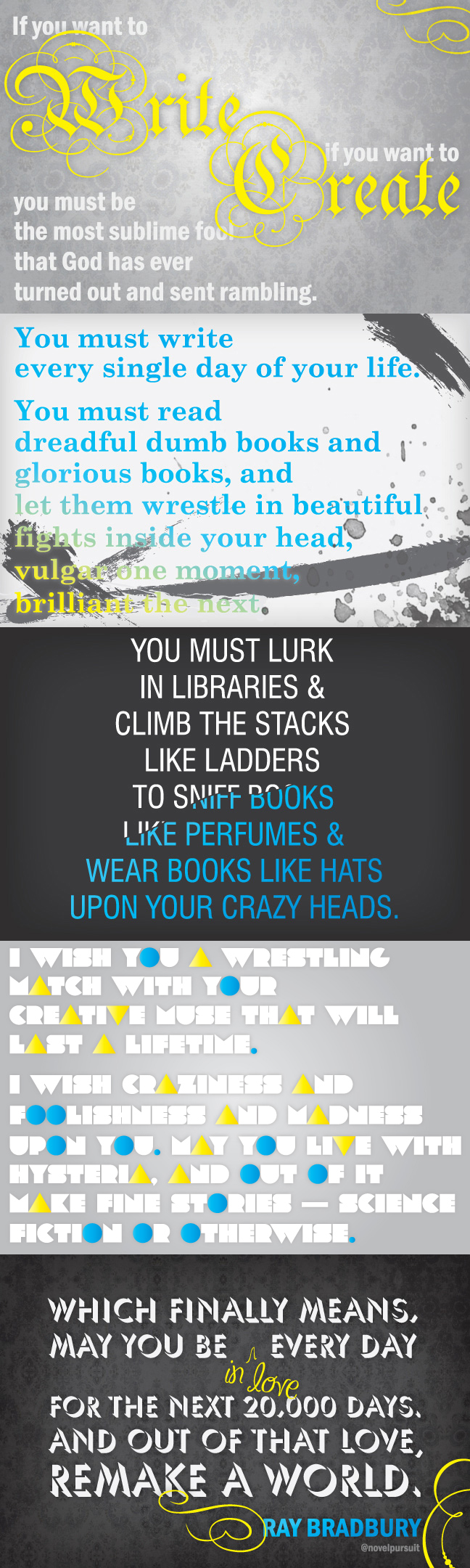
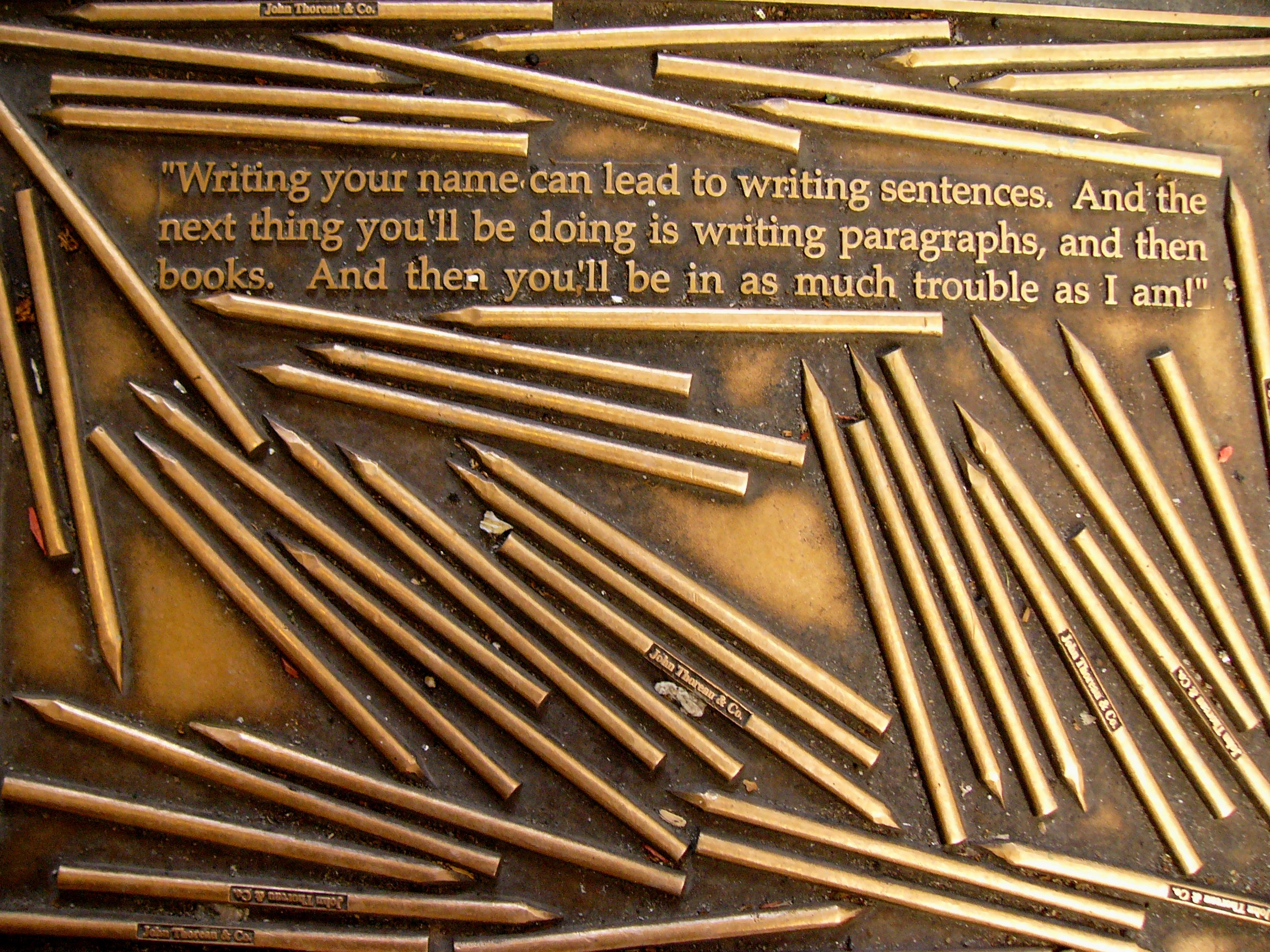
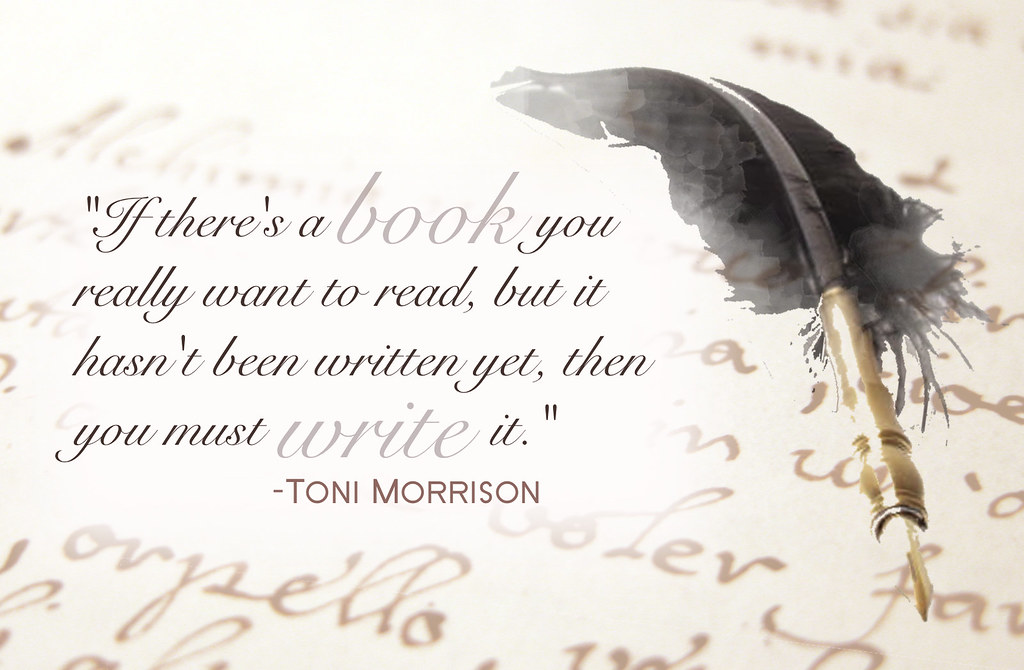
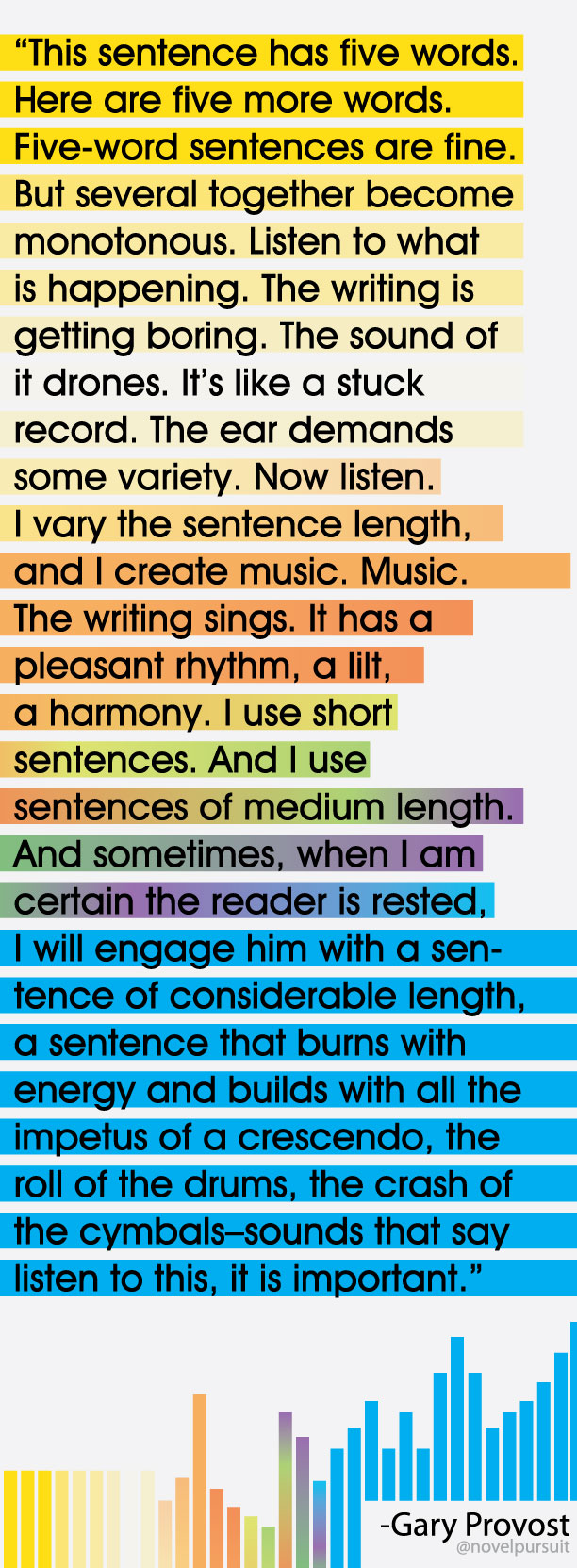
More Writing Quotes~

Saturday, August 4, 2012

Camp Nanowrimo ~

Camp NaNoWriMo (National Novel Writing Month) - A writing event that is like NaNoWriMo only it is held in the summer months of July and/or August. It is where you try to write 50 thousand words in a single month.


Today is day four of Camp NaNoWriMo, and today I'm supposed to have about... 6452 words according to the calendar that I made.

(Click for a larger version)
And right now, I currently have about 8,061 words. It's not a lot for those who has done Nanowrimo before, but it's a lot to me. I'm pleased with myself for even having that much words in just a short amount of time, considering that I've never tried to write 50 thousand words before.


And Camp Nanowrimo or plain old Nanowrimo lets you do that. Just write fifty thousand words of your novel (or poetry, or script, or whatever), without really worrying about what is going on the page. It's nice because the book that you have been wanting to write for years is now suddenly out on paper free from your  head. So if you love writing and want a book that was written by you, then I recommend doing Nanowrimo, and if you're a bit impatient and want to start now, then start now. It isn't too late to join Camp Nanowrimo, though you'll have a lot of words to catch up on.


Monday, July 30, 2012

Difference between a writer and an author


Writing has nothing to do with publishing. Nothing. People get totally confused about that. You write because you have to - you write because you can’t not write. The rest is show-business. I can’t state that too strongly. Just write - worry about the rest of it later, if you worry at all. What matters is what happens to you while you’re writing the story, the poem, the play. The rest is show-business.
Peter S. Beagle

In other words, being a writer is just about writing the story and having fun. While being an author is just about writing stories and getting paid to do it. 

Saturday, July 28, 2012

Introducing characters ~ DON'T


A story without characters isn’t a story. There has to be at least one character, be it a person, animal, plant, alien, or mountain.
With that said, however, your characters can’t just randomly poof into the story (… unless they really do poof), or be treated as if they’ve been there since before the beginning.
  • Poof! Here’s my 10-page biography 
“Let’s go get some cake,” Mark said.
Jenny also wanted to tag along. Jenny was a really nice girl, with really long chocolate brown hair and the smoothest skin I’ve ever seen. Her parents were divorced, but she was still a really happy kid. She’s shorter than me, but last year she was taller. Jenny’s also terrified of moths and grasshoppers because of an incident when she was little. When she was five…
We had never met Jenny, but that paragraph is too much for a first meeting. Going to get cake with someone new doesn’t mean you should proceed to give their life story. When you first introduce a character, I would suggest giving their name, their relation to the main character/narrator, and a few thoughts and opinions about them. We don’t have to learn about Jenny all at once, but by the time the story’s finished (and as long as she’s not a purposely-mysterious character or someone who was met within the last fifty pages) Jenny should be a close acquaintance to us.
  • You’ve known me since birth
So after that example you’re understanding what I meant here, right? I think I explained it pretty well, and we’re on the same page, so let’s continue with our story.
Yes, the ‘You’ve known me since birth’ character is what I’d say to be the complete opposite of the ‘Poof! Here’s my 10-page biography’ character. If this one is the narrator’s best friend, you’ll be lucky to know their name. It’s very likely that you won’t know they’re the narrator’s best friend. It’s a confusing character because the readers are the only ones who don’t know. Every other character knows this guy (let’s call him Adam) Adam, so no one feels any inclination to shed some light on him, and it takes a very long time to learn whether or not he’s the school janitor or the president of the drama club (or both?). 

Thursday, July 26, 2012

Another Challenge

CHALLENGE
I dare you to write 750 words every day for the next seven days. Just go to 750words.commake an account, and just write. No matter what don't stop writing. Then after a week is done, report back here and comment below on how it went. Or if you want you can email me how your 750 words experience, at thehungergamesmockingjay[at]gmail[dot]com


Tuesday, July 24, 2012

10 Rules for Writers, Janet Fitch's style.


1. Write the sentence, not just the story 
Long ago I got a rejection from the editor of the Santa Monica Review, Jim Krusoe. It said: “Good enough story, but what’s unique about your sentences?” That was the best advice I ever got. Learn to look at your sentences, play with them, make sure there’s music, lots of edges and corners to the sounds. Read your work aloud. Read poetry aloud and try to heighten in every way your sensitivity to the sound and rhythm and shape of sentences. The music of words. I like Dylan Thomas best for this–the Ballad of the Long-Legged Bait. I also like Sexton, Eliot, and Brodsky for the poets and Durrell and Les Plesko for prose. A terrific exercise is to take a paragraph of someone’s writing who has a really strong style, and using their structure, substitute your own words for theirs, and see how they achieved their effects.
2. Pick a better verb 
Most people use twenty verbs to describe everything from a run in their stocking to the explosion of an atomic bomb. You know the ones: Was, did, had, made, went, looked… One-size-fits-all looks like crap on anyone. Sew yourself a custom made suit. Pick a better verb. Challenge all those verbs to really lift some weight for you.
3. Kill the cliché. 
When you’re writing, anything you’ve ever heard or read before is a cliché. They can be combinations of words: Cold sweat. Fire-engine red, or phrases: on the same page, level playing field, or metaphors: big as a house. So quiet you could hear a pin drop. Sometimes things themselves are cliches: fuzzy dice, pink flamingo lawn ornaments, long blonde hair. Just keep asking yourself, “Honestly, have I ever seen this before?” Even if Shakespeare wrote it, or Virginia Woolf, it’s a cliché. You’re a writer and you have to invent it from scratch, all by yourself. That’s why writing is a lot of work, and demands unflinching honesty.
4. Variety is the key. 
Most people write the same sentence over and over again. The same number of words–say, 8-10, or 10-12. The same sentence structure. Try to become stretchy–if you generally write 8 words, throw a 20 word sentence in there, and a few three-word shorties. If you’re generally a 20 word writer, make sure you throw in some threes, fivers and sevens, just to keep the reader from going crosseyed.
5. Explore sentences using dependent clauses.
A dependent clause (a sentence fragment set off by commas, dontcha know) helps you explore your story by moving you deeper into the sentence. It allows you to stop and think harder about what you’ve already written. Often the story you’re looking for is inside the sentence. The dependent clause helps you uncover it.
6. Use the landscape. 
Always tell us where we are. And don’t just tell us where something is, make it pay off. Use description of landscape to help you establish the emotional tone of the scene. Keep notes of how other authors establish mood and foreshadow events by describing the world around the character. Look at the openings of Fitzgerald stories, and Graham Greene, they’re great at this.
7. Smarten up your protagonist. 
Your protagonist is your reader’s portal into the story. The more observant he or she can be, the more vivid will be the world you’re creating. They don’t have to be super-educated, they just have to be mentally active. Keep them looking, thinking, wondering, remembering.
8. Learn to write dialogue. 
This involves more than I can discuss here, but do it. Read the writers of great prose dialogue–people like Robert Stone and Joan Didion. Compression, saying as little as possible, making everything carry much more than is actually said. Conflict. Dialogue as part of an ongoing world, not just voices in a dark room. Never say the obvious. Skip the meet and greet.
9. Write in scenes. 
What is a scene? a) A scene starts and ends in one place at one time (the Aristotelian unities of time and place–this stuff goes waaaayyyy back). b) A scene starts in one place emotionally and ends in another place emotionally. Starts angry, ends embarrassed. Starts lovestruck, ends disgusted. c) Something happens in a scene, whereby the character cannot go back to the way things were before. Make sure to finish a scene before you go on to the next. Make something happen.
10. Torture your protagonist.
The writer is both a sadist and a masochist. We create people we love, and then we torture them. The more we love them, and the more cleverly we torture them along the lines of their greatest vulnerability and fear, the better the story. Sometimes we try to protect them from getting booboos that are too big. Don’t. This is your protagonist, not your kid.

source
original source
picture source

Sunday, July 22, 2012

A repeat

Friday, July 20, 2012

Famous Author Quotes ~

CHALLENGE
Write a story or a poem based off of any picture that you find on my blog. 
Then email it to thehungergamesmockingjay[at]gmail[dot]com for a chance to have it featured on this site.
When does it expire? Never


Wednesday, July 18, 2012

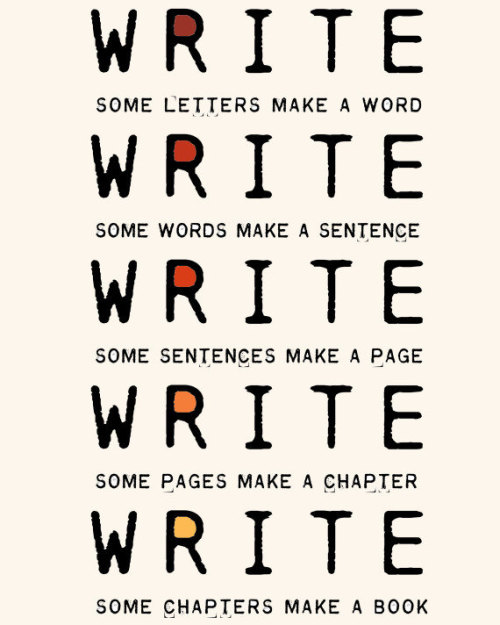
WRITE

Monday, July 16, 2012

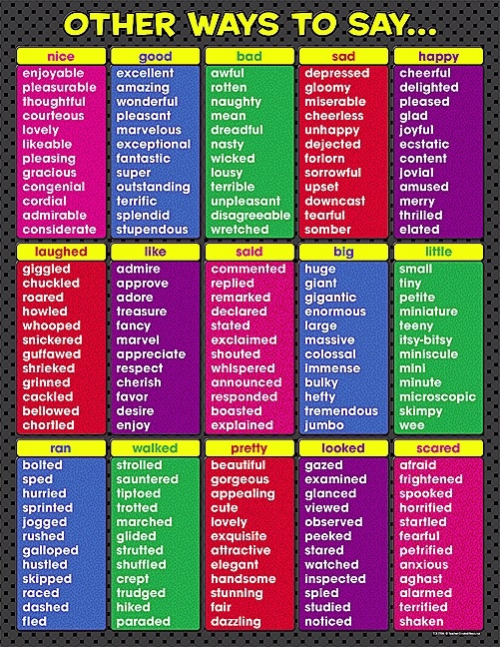
Synonyms


Use them and your writing won't sound boring. 

Friday, July 13, 2012

Show don't tell


Read this to the end because it will definitely help you on how to show not tell. 
Secret paragraphing
How to show not tell

Tuesday, July 10, 2012

A school I would definitely go to.

If there was a school for writers

How to torture/kill in the saddest ways your favourite characters - with Suzanne Collins.
How to be a complete troll about your plot - with Rick Riordan.
How to be the most cruel, harsh, sadistic and violent writer on Earth - with Michael Grant.
How to give your characters the most revolting and traumatic past - with J. K. Rowling.
How to ascend from a funcking fanfiction writer to a fucking best-seller writer - with Cassandra Clare.
How to have the most crazy, deep and lush metaphors (which don't need exactly to have meaning or sense) - with Tahereh Mafi.
How to have the mad and non-sense ideas to books, but make them best-sellers - with Scott Westerfeld.
How to be a boss - with Neil Gaiman.
How to make the funcking reader cry a fucking ocean in three words - with Nicholas Sparks.
How to have the best and most creative narrative of the books - with Markus Zusak.
How to write teenage stories without being disgusting - with Meg Cabot.
How to create characters so human that you believe they are real - with John Green.
How to be shit and pretend you are good - with Stephenie Meyer.
How to create the most perfect male in the whole universe and tell everyone he's not based on a real character - with Veronica Roth
How to break everyones hearts with your first book and then put the pieces back together with the second - Gayle Forman

source

Saturday, July 7, 2012

More links that you'll find useful

Rules for writing fiction

Authors telling you their rules for writing fiction. 
Part I
Part II


Seven things that will doom your novel. 

There are seven things you shouldn't do to your novel and that includes quitting, so here are ways to avoid them.

What is the difference between the prologue, introduction, and the first chapter? 

A writer that has the answers to your question about beginnings. 

Mistakes that you can make on the first page. 

There are about thirteen mistakes that you can make on the first page alone so read the link so you can avoid them.

Tuesday, July 3, 2012

Have a great summer


Songs
Float
Through
The
Air
In
Undisturbed
Amounts
This
Sunny
Day